Safety Risks to Know Before Concrete Work in Staten Island
Concrete work brings silica dust, burns from wet mix, utility strikes, machinery hazards, and curing risks. Here is what can go wrong and how a professional Brooklyn crew controls each one.
Published
Part of our Concrete Work service.
Silica Dust from Cutting and Grinding Concrete
Cutting, grinding, or breaking cured concrete releases crystalline silica dust. Breathing it over years can scar lung tissue, so it is not something to shrug off during a weekend demo in a Brooklyn backyard or basement. This guide comes from APPLE MASONRY INC in Staten Island.
Professional crews control it with wet-cutting methods and dust extraction attachments on saws and grinders. Dry cutting indoors or in a fenced Brooklyn yard with neighbors a few feet away is the worst case: the dust hangs in still air and drifts over property lines.
If you are cutting concrete yourself, rent a wet saw, wear a fitted respirator rated for silica, and keep windows closed on the side of the house you are working. If a contractor shows up dry-cutting with no respirator and no dust control, ask why.
Chemical Burns and Skin Damage from Fresh Concrete
Wet concrete is caustic. The cement paste is highly alkaline, and skin contact over an hour or more can cause chemical burns that look like ordinary irritation at first, then blister. Kneeling in a mix while finishing a slab without knee boards is the most common way homeowners get hurt.
Crews wear waterproof gloves, rubber boots, and long pants during a pour. They also keep a pH-neutral rinse on hand for any splash that reaches skin, because washing with plain water does not fully neutralize cement.
For anyone handling the mix on a Brooklyn job, the basics are simple: barrier clothing, no bare hands in the mix, and washing immediately after contact, not an hour later. Dogs and kids should stay off a fresh slab until it is set hard enough to walk on.
Utility Strikes During Excavation and Forming
Most concrete projects in Brooklyn start with digging, whether it is a slab, steps, or a curb. Beneath nearly every property sit gas, electric, water, and communication lines, and many are shallower than people expect. Hitting a live electric line or gas service is the single most dangerous moment in the job.
The rule is absolute: dig safely by having underground utilities marked before any shovel or excavator touches soil. In New York, utilities are located free of charge through the state one-call system, and professional crews call in every time, on every job, in every borough.
Hand-dig the first foot near marked lines. If a line does get struck, clear the area and call the utility immediately. A homeowner with a rented mini-excavator and no locate is taking on the biggest risk on this list, and there is no good reason for it.
Formwork, Heavy Slabs, and Machinery on Tight Brooklyn Sites
Brooklyn lots leave little room to work. Forms have to hold thousands of pounds of wet concrete without bowing, mixer trucks and pumps need stable footing, and neighbors share fences and walkways with the operation. A failing form wall or a truck sinking into soft ground is a real hazard, not a theoretical one.
Crews brace forms with stakes and kickers, check them before the pour, and keep people clear of the pour face while concrete is moving. They also plan access before the truck arrives: where it parks, where the chute reaches, and who is standing where.
Watch for two warning signs on any site: forms that flex when pushed, and workers walking under a raised chute or bucket. Reinforcement mesh and rebar are another hazard; the exposed ends of vertical rebar are capped or flagged on a professional site.
Curing Hazards: Slippery Surfaces, Barriers, and Weather
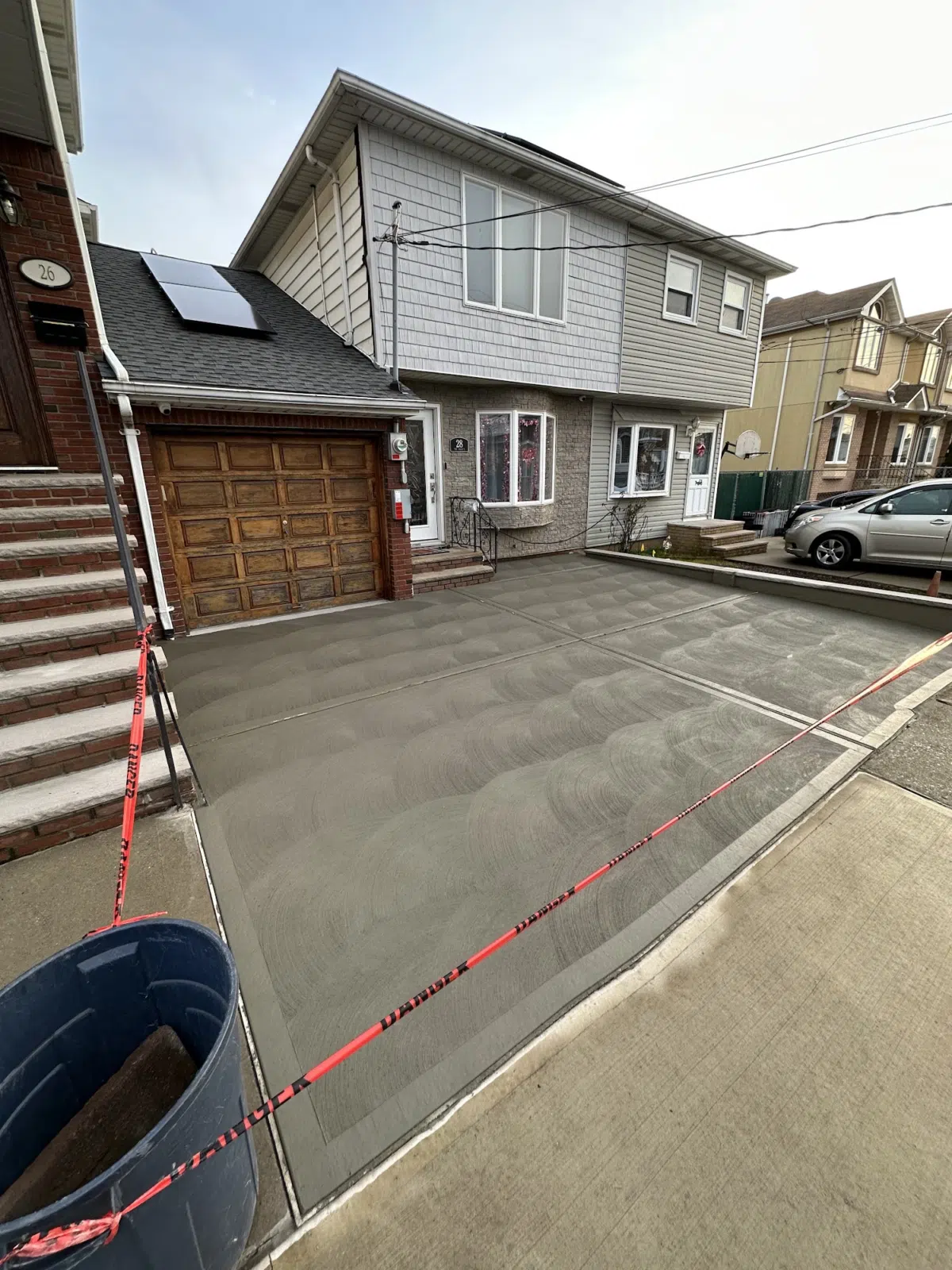
The pour ends and the risk does not. Fresh concrete stays slippery and soft for a day or more, and it reaches usable strength over the following week. Uncured slabs that people, pets, or cars cross too early can fail, and a wet slab with no barrier around it is a slip hazard for anyone cutting through a Brooklyn backyard.
Professional crews rope or fence off the work, put up signage where a public walkway passes, and set a realistic foot-traffic window based on the mix and the weather. Cold snaps and hot, dry wind both damage curing concrete, so timing the pour and protecting the surface with curing methods matters as much as the pour itself.
Saw cuts and joint sealing come later, which brings the silica dust risk back, so dust control continues until the job closes out.
How a Professional Crew Manages These Risks
Every risk above has a straightforward control, and a crew that does concrete work week after week runs them without being asked. Utility locates before digging. Wet-cutting and dust extraction whenever concrete gets sawed or ground. Gloves, boots, and barrier clothing on every pour. Braced, inspected forms. Barriers and honest foot-traffic windows during curing.
That is also what separates a careful contractor from a cheap one in Brooklyn. The right crew will walk the site with you first, point out access limits, drainage, and where the mix will come from, and explain the curing schedule so you know when it is safe to use the surface.
We handle residential concrete work across Brooklyn, from slabs and walkways to steps and curbs, with the same process on every job. If you are planning a pour, start with our Concrete Work service page for what we build, then schedule a site walkthrough so the risks are handled before the first shovel goes in.
Ready to move forward? See our Concrete Work service
Written by the APPLE MASONRY INC team.
Safety Risks to Know Before Concrete Work in Staten Island FAQs
Is it safe to pour my own concrete slab in Brooklyn?
Small slabs are done by homeowners, but the risks are real: silica dust from cutting, chemical burns from wet mix, and utility strikes during digging. A utility locate, barrier clothing, and dust control are minimums. For anything structural, load-bearing, or over a decent size, a professional crew is the safer choice.
How long should I stay off new concrete?
Light foot traffic is usually possible within a day or two, but full strength develops over about a week, and vehicle traffic takes longer. It depends on the mix, the weather, and what the slab is for. Your contractor should give you a clear window before the pour and barrier the area until then.
Do contractors have to call before digging in New York?
Yes. Underground utilities must be marked before excavation in New York, and the locate service is provided at no charge through the state one-call system. Professional crews call in on every job. If a contractor plans to dig on your Brooklyn property without a locate, that is a serious red flag.
Why is concrete dust a health concern?
Concrete dust contains crystalline silica. Breathing fine silica particles over repeated exposure can cause permanent lung damage. The control is simple: wet cutting, dust extraction, and a proper respirator. Any concrete cutting or grinding on your property should include at least one of those measures, ideally all three.
Still have a question about your project? Talk to the crew